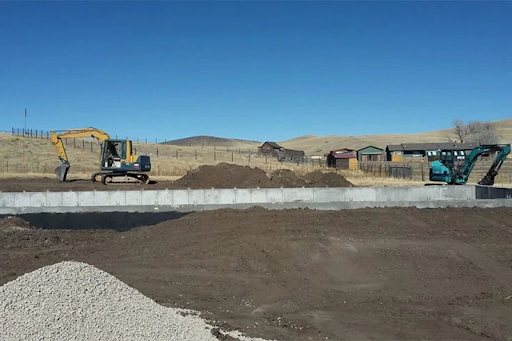
Poor excavation can lead to drainage problems, unstable foundations, and damaged utility lines, even when the finished concrete looks flawless. Understanding the importance of excavation in construction helps you assess the work beneath the surface before hiring a contractor.
In this article, we cover five key excavation phases, what each involves, and how to compare contractors for your Denver or Loveland project.
Importance of Excavation in Construction: How These 5 Phases Were Selected
Each phase shapes the ground your structure will rest on, so choosing a contractor starts with understanding them. Every phase is a confirmed excavation phase at Concrete and Excavating Inc. Each one sets the subgrade or site condition that later concrete work relies on.
Phases that involve protective systems, utility locating, or expansive soil include the matching safety check. The five phases together serve residential buyers, commercial buyers, or both.
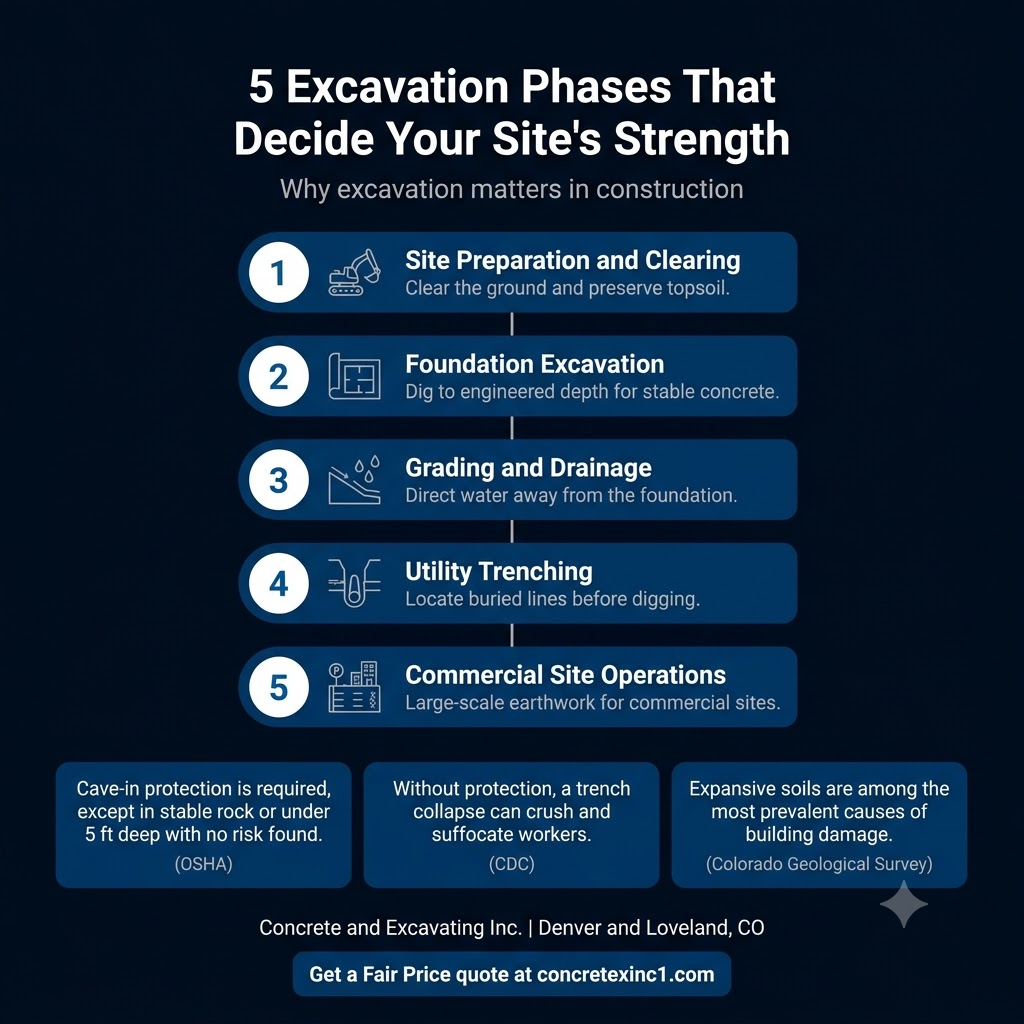
1. Site Preparation and Clearing
Clear, well-prepared ground gives every later phase a safe starting point.
What This Phase Does
Concrete and Excavating Inc. begins with land clearing, topsoil stripping, rock excavation, and demolition support. This step opens access to the site and preserves valuable topsoil for later landscaping.
Best for New Builds and Home Additions That Need Clear Access
This phase pays off when your lot has vegetation, old structures, or bedrock in the way. Ask how a contractor handles topsoil and rock before work begins.
One Honest Limitation
Preparation scope depends on what the site survey reveals. Hidden rock or old foundations can change the plan, so a clear estimate process matters.
2. Foundation Excavation
Digging to the right depth sets up a pour that starts level and stays stable.
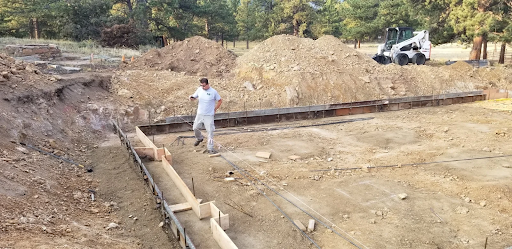
Foundation excavation digs to engineered depths so basements and crawl spaces sit on stable, correctly sloped ground. Full basements need the deepest cuts, crawl spaces far less, and slab-on-grade foundations the least. Concrete and Excavating Inc. completes this phase before any concrete is placed.
What This Phase Does
This phase sets depth, slope stability, and moisture barrier preparation before any form goes up. The importance of excavation in construction shows most clearly here, because every later layer rests on this work.
Every excavation needs protection from cave-ins, except those made entirely in stable rock or those under 5 feet deep where a competent person finds no sign of a potential cave-in, according to the OSHA guidelines.
Concrete and Excavating Inc. applies OSHA-compliant protective systems wherever the standard requires them. A competent person inspects each excavation daily.
The CDC warns that without a protective system, a trench collapse can crush and suffocate workers. Soil matters as much as depth, so ask each contractor how they evaluate it before setting a depth.
Expansive or swelling soils rank among the most prevalent causes of damage to buildings and construction across the United States, according to the Colorado Geological Survey.
Best for Builders and Homeowners Starting a Basement or Crawl Space
You benefit most if you plan a new foundation or an addition that needs below-grade space. Concrete and Excavating Inc. covers both the excavation and the concrete foundation.
One Honest Limitation
Final depth relies on soil conditions and the foundation design. A reliable estimate follows a site evaluation.
3. Grading and Drainage
Grading and drainage steer water away from your foundation before it can build pressure against the concrete.
What This Phase Does
Rough grading shapes the lot, and swale creation redirects stormwater. This work prevents hydrostatic pressure from building against future concrete structures. French drain installation adds a second layer of water control.
Best for Properties With Runoff Concerns Near the Foundation
You gain the most if water pools near walls or slabs after storms. Weather-ready drainage keeps surface water moving away from the structure. Ask how the contractor plans water flow around the foundation before grading begins.
One Honest Limitation
Grading works within the site’s existing slope and design. Severe drainage problems may need combined grading, drainage, and foundation solutions.
4. Utility Trenching
Utility trenching puts water, sewer, and power lines in place without striking the lines already buried on your property.
What This Phase Does
Concrete and Excavating Inc. coordinates directly with municipal utility companies to daylight and locate existing water, sewer, septic, electrical, and telecommunications lines before it trenches. This protocol protects buried infrastructure from damage.
According to OSHA, the estimated location of underground utilities must be determined before an excavation opens. Confirm that your contractor follows a utility-locating step before trenching starts.
Best for Projects That Need New Service Lines
This phase fits any new home, addition, or commercial building that requires water, sewer, electrical, or gas connections.
One Honest Limitation
Line locating adds a coordination step before trenching, so plan for it in your schedule.
5. Commercial Site Operations
Commercial site operations move large volumes of earth for parking lots, retail centers, and infrastructure projects.
What This Phase Does
This phase covers high-volume earthmoving while meeting ADA compliance and civil engineering drainage specifications. Concrete and Excavating Inc. serves commercial building sites, parking lot development, infrastructure projects, and multi-family housing.
Best for Developers, Property Managers, and Commercial Builders
This phase suits projects that need one contractor to manage earthwork across a large footprint. Request written ADA and drainage specifications before earthmoving starts.
One Honest Limitation
Scope follows the site’s civil engineering and ADA specifications. Plans set the boundaries, so review them early.
Frequently Asked Questions
Q1. How deep does excavation need to be for a foundation?
Depth varies by foundation type. Full basements need the deepest excavation, crawl spaces need far less, and slab-on-grade foundations need the least. Soil conditions and the engineered design set the final depth for your site.
Q2. How does utility locating work before excavation in Loveland?
Concrete and Excavating Inc. coordinates directly with municipal utility companies to daylight and locate water, sewer, septic, electrical, and telecommunications lines before trenching in Loveland and Denver.
This step protects buried infrastructure from damage. Confirm the locating process with your contractor before work begins.
Q3. How do I compare excavation contractors in Denver?
Check that the contractor is fully licensed and insured. Compare how each one applies protective systems, locates utilities, and compacts soil. Seek a fair price quote that stays accurate from day one.
Q4. What happens if excavation is done wrong before concrete is poured?
An uneven subgrade leads to variable concrete thickness, which creates stress points and premature cracking. Poor drainage can also let hydrostatic pressure build against foundations. Proper compaction in consecutive lifts helps prevent settling after the concrete cures.
Correct excavation reduces the risk of all three problems.
Next Step for Your Site
Choosing the right excavation contractor helps prepare your site for a stable foundation, effective drainage, and reliable concrete work. Concrete and Excavating Inc. provides excavation services for properties in Denver and Loveland.
Planning a construction project? Contact Concrete and Excavating Inc. through its official website to discuss your site requirements and request a fair price quote.