Flatwork concrete is any poured concrete surface built to stay flat, stable, and durable under foot traffic or vehicle loads, including driveways, patios, sidewalks, and garage floors.
Most people think of it as a simple pour, but the long-term result depends on how the base is prepared, how the mix is handled, where joints are placed, and how the slab is cured.
This guide explains what flatwork concrete is, why it matters to homeowners, and what to check before hiring a contractor for the job.
What Flatwork Concrete Is Simply Explained
Flatwork concrete is not just “flat concrete.” It is a system of excavation, grading, forming, placement, finishing, jointing, and curing that creates horizontal surfaces built to last.
Core Definition in Plain Language
Flatwork concrete refers to poured concrete installed on a level or gently sloped base to create flat, usable surfaces such as driveways, patios, sidewalks, and garage floors. These slabs are built to carry loads, resist weather, and create safe walking or driving surfaces around a home.
Flatwork is different from vertical concrete work like foundation walls because the performance issues are different. A flat slab has to manage shrinkage, drainage, surface traction, and exposure to freeze-thaw cycles across a broad horizontal area.
How It Works in Practice
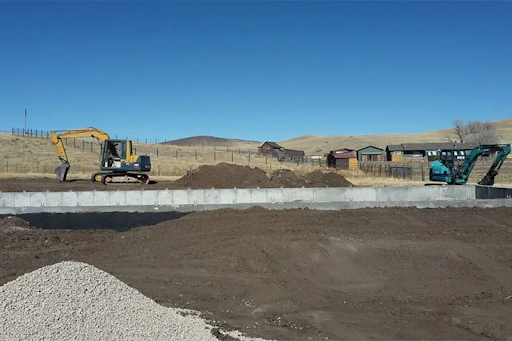
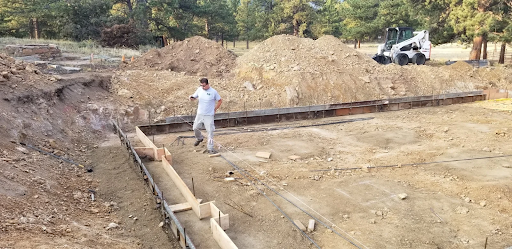
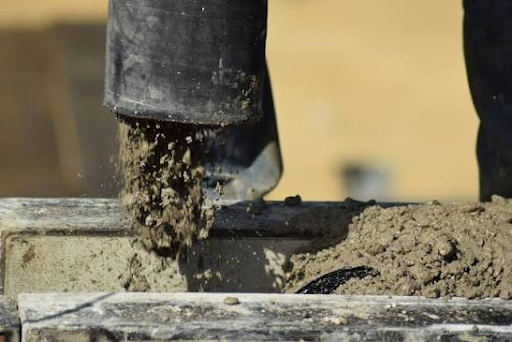
A proper flatwork project starts with excavation and grading so the slab sits on a stable base and drains the right way. After that, the crew installs forms, prepares reinforcement if needed, places the concrete, levels the surface, finishes it for the intended use, and protects it while it cures.
The NRMCA Concrete In Practice CIP 14’s technical guidance says flatwork quality depends on selecting the correct mix, avoiding frozen subgrades, and controlling added water at the site.
That matters because too much water or poor base conditions can weaken the slab and increase the risk of dusting, scaling, and early cracking.
Why Flatwork Concrete Matters to Homeowners
Flatwork concrete affects safety, drainage, curb appeal, and repair costs. A slab that looks fine on day one can become expensive if the installation basics were skipped.
The Cost or Consequence of Ignoring the Details
Driveways, patios, and garage floors take repeated stress from vehicles, foot traffic, moisture, and temperature swings. When the base is soft, the slope is wrong, or the finishing process is rushed, the result can be uneven settling, trip hazards, standing water, and premature cracking.
Freeze-thaw exposure is one of the biggest durability risks in Colorado. A 2024 peer-reviewed study found cumulative mass loss in tested concrete increased from about 0.12% at 50 freeze-thaw cycles to about 1.46% at 150 cycles.
Local Colorado guidance, such as What Colorado’s Freeze-Thaw Cycles Do to Concrete, also warns that exterior concrete exposed to moisture and deicing conditions can deteriorate quickly when it is not built for freeze-thaw performance.
The Benefit of Understanding It Before You Hire
A homeowner who understands flatwork can ask better questions before signing a quote. That includes asking how the contractor prepares the base, how joint spacing is planned, what curing method is used, and whether the work meets recognized standards.
From a permit and market perspective, Larimer County Monthly Building Activity Reports provide an overview of local construction activity. Each report summarizes permits issued, inspections performed, code enforcement violations, plan reviews, revenues received, and total construction valuation for unincorporated county projects.
That shows permit-tracked construction activity is a real, ongoing factor in local building work rather than a theoretical concern. When contractors skip permit or compliance steps, homeowners can face remediation costs, failed inspections, or extra fees later.
Common Misconceptions About Flatwork Concrete
The biggest mistakes come from treating flatwork like a basic pour instead of a controlled construction process. Good slabs are planned around standards, climate, and expected use.
Misconception 1: “Flatwork Is Just a Simple Pour”
Flatwork involves more than pouring and finishing concrete. Slab performance depends on technical decisions such as thickness, reinforcement, joint placement, finishing, and curing.
The ACI 302.1R Guide for Concrete Floor and Slab Construction explains how slab thickness, reinforcement, and joint spacing work together to help control cracking and curling. ACI 224.3R-95, Joints in Concrete Construction, also provides guidance on contraction joints to help control where cracks form.
Before hiring a contractor, homeowners should ask about:
- Joint layout and spacing
- Slab thickness and reinforcement
- Finishing and curing methods
These details help determine how well a concrete slab performs after installation.
Misconception 2: “All Concrete Mixes Are the Same”
Exterior flatwork in freeze-thaw climates needs a mix suited to the slab’s exposure and use. That includes controlling water content and using proper air entrainment.
ASTM C94, Standard Specification for Ready-Mixed Concrete, sets requirements for ready-mixed concrete and helps ensure the mix meets the project’s needs.
Adding extra water on site may make concrete easier to finish, but it can reduce strength and durability. Homeowners should ask what standard the concrete meets and how the crew controls water during placement and finishing.
How Concrete and Excavating Inc. Helps With Flatwork Concrete
Concrete and Excavating Inc. handles flatwork as part of a larger site-preparation and concrete workflow, which helps control the steps that affect slab performance.
Specific Flatwork Services for Homeowners
Concrete and Excavating Inc. provides flatwork-related residential services that include driveways, walkways, patios, garage floors, decorative concrete finishes, concrete renovation, and slab jacking or leveling for settled surfaces.
That matters because many slab problems start below the surface, so the ability to connect grading, base prep, repair, and new flatwork can reduce disconnects between trades.
The company also offers related products and services that support slab performance, including ready-mix concrete solutions designed to meet established mix requirements and site-preparation work such as fine grading and drainage integration.
For a homeowner, that means the project can be evaluated as a full surface-and-subgrade system rather than just a finish layer.
What the Process Looks Like
The process includes excavation and base preparation, forming, reinforcement where needed, concrete placement, finishing, control-joint layout, and curing. NRMCA CIP 14 and ACI 302.1R emphasize stable support, proper concrete handling, finishing, and crack-control planning.
When comparing contractors, ask how each step will be handled. A qualified contractor should explain the following:
- How the base will be prepared and drainage addressed
- How control joints will be placed
- How the concrete will be finished and cured
- How the work will account for local Colorado conditions
Frequently Asked Questions
Q1. What exactly is flatwork concrete?
Flatwork concrete is concrete installed as a flat or gently sloped surface, such as a driveway, patio, sidewalk, or garage floor. It relies on base preparation, controlled finishing, joint layout, and curing so the surface stays durable and usable over time.
Q2. Why do new concrete slabs have lines cut into them?
Those lines are contraction joints. They are placed on purpose to control where shrinkage cracks form as the slab cures and responds to temperature changes. Without joints, the slab can still crack, but the cracking is more likely to appear in random locations.
Q3. How does Colorado weather affect flatwork concrete?
Colorado’s exterior concrete is exposed to freeze-thaw cycles, snow, sun, and moisture changes.
A 2024 study, Freeze-Thaw Damage Characteristics of Concrete Based on Compressive Mechanical Properties and Acoustic Parameters, found that the tested concrete lost about 28.57% of its compressive strength after 150 freeze-thaw cycles.
The finding shows why exterior flatwork needs an appropriate mix, proper drainage, and adequate curing for long-term performance.
Q4. What should a homeowner ask before hiring a flatwork contractor?
Ask how the base will be prepared, what mix standard will be used, how joints will be laid out, what curing method will be used, and whether permits or inspections apply. Those questions help separate a surface-level quote from a process-driven installation plan.
Conclusion
Flatwork concrete depends on more than the finished surface. Proper base preparation, drainage, joint placement, concrete handling, and curing all affect how a slab performs over time, especially under Colorado’s freeze-thaw conditions.
If you’re planning a driveway, patio, garage floor, or concrete project in Denver, Loveland, or the surrounding Front Range, Concrete and Excavating Inc. can help with the concrete and site-preparation work needed for a durable result.
Get a free quote from Concrete and Excavating Inc. and discuss your project with the team before work begins.