Choosing the right commercial concrete flatwork contractor isn’t always straightforward, especially when you’re searching for commercial concrete flatwork and trying to avoid costly mistakes.
In this blog, we’ll walk through the real challenges businesses face, what quality and durability truly mean, and how to evaluate value—so you can make a confident, well-informed decision before moving forward.
Common Challenges Businesses Face with Commercial Concrete Flatwork
According to the data, “The global market for concrete was worth USD 1.82 billion in 2024, and it’s expected to be worth USD 2.28 billion by 2030.” — Grand View Research
This growth highlights that concrete is an essential compound for construction or any kind of flatwork.
Even when the need for commercial concrete flatwork is clear, many businesses struggle once the project begins. The issues usually aren’t about the concrete itself—but about planning, execution, and long-term performance.
Some of the most common challenges include:
- Cracking and surface damage too soon due to poor preparation or low-strength mixes
- Uneven or poorly finished slabs that create safety risks and accessibility concerns
- Project delays that interrupt daily operations or tenant access
- Budget overruns caused by unclear scopes or unexpected fixes later
- Difficulty finding reliable flatwork concrete contractors who understand commercial demands
These challenges highlight why choosing the right approach—and the right contractor—matters far more than simply getting concrete poured.
Why Quality in Commercial Concrete Flatwork Goes Beyond Appearance
At first glance, concrete flatwork may look simple. But for commercial properties, true quality runs deeper than a smooth surface. What’s beneath and within the concrete often determines how well it performs over time.
Key elements that define quality commercial flatwork include:
- Proper site preparation and grading to create a stable base before pouring.
- Commercial-grade concrete strength (PSI levels) designed to handle heavy foot traffic, vehicles, and equipment.
- Correct reinforcement placement, such as rebar or wire mesh, to prevent shifting and cracking.
- Thoughtful joint spacing and finishing techniques that control natural concrete movement.
When these details are handled correctly, commercial concrete flatwork lasts longer, performs better, and reduces the need for early repairs—making quality a practical decision, not just a visual one.
Durability as a Long-Term Business Investment
For commercial properties, durability isn’t a bonus—it’s a requirement. Concrete flatwork must stand up to daily use, changing weather, and constant pressure without becoming a maintenance headache.
- Local climate conditions, including freeze-thaw cycles that can weaken poorly cured concrete.
- Soil stability and drainage planning, which help prevent shifting and settlement.
- Load-bearing capacity, especially for parking areas, walkways, and service zones.
- Proper curing methods, allowing the concrete to gain full strength over time.
Investing in durable commercial concrete flatwork helps businesses avoid frequent repairs, reduce downtime, and protect both safety and property value—making it a smart long-term decision rather than a short-term fix.
Understanding Value Without Turning it into a Price Comparison
When planning commercial concrete flatwork, it’s tempting to focus mainly on the quote. But value goes far beyond the initial number on paper.
According to the data, “Material costs for concrete have increased steadily over recent years, with the average selling price rising by nearly $159 per cubic yard till 2023.” —Concrete Financial Insights
This makes contractor planning and quality all the more critical to ensure the budgeted costs deliver lasting performance. And the real cost of any project is often revealed months—or years—later.
Here’s what true value typically includes:
- Clear and detailed project scope, so expectations are aligned from day one.
- Thoughtful planning and coordination that minimizes disruption to daily business operations
- Quality materials and workmanship that reduce future maintenance needs
- Reliable timelines and accountability, avoiding costly delays or rework
Instead of asking, “Who’s the cheapest?” Businesses benefit more from asking, “Who drives lasting results?”
This mindset helps when evaluating flatwork concrete contractors near you and choosing a partner that supports long-term performance and peace of mind.
A Practical Look at Contractor Capabilities
At this stage, many businesses aren’t trying to compare contractors line by line—they simply want to understand what professional commercial flatwork should realistically include.
The table below highlights common capability areas and businesses typically experience when standards vary.
| Key Consideration | What Often Causes Issues | What Well-Planned Commercial Flatwork Looks Like |
| Site Preparation | Rushed or minimal grading | Proper grading and compaction before pouring |
| Concrete Strength | Standard mixes not suited for heavy use | Commercial-grade PSI tailored to traffic and load |
| Reinforcement | Inconsistent or skipped entirely | Reinforcement used where structurally required |
| Project Planning | Loose timelines and unclear steps | Structured scheduling and clear coordination |
| Long-Term Performance | Early cracking and repairs | Designed for durability and reduced maintenance |
For businesses looking for this level of preparation, coordination, and durability, Concrete and Excavating Inc. is one example of a contractor that aligns with these professional commercial flatwork standards by combining excavation knowledge with concrete expertise.
This kind of capability-focused view helps narrow choices without turning the decision into a purely price-driven comparison.
How Local Experience Influences Commercial Concrete Flatwork Outcomes
Local experience plays a bigger role in commercial concrete flatwork than many businesses realize. Conditions can vary widely from one area to another, and contractors who understand the local environment are better equipped to deliver consistent results.
Here’s how local expertise makes a difference:
- Soil and ground condition awareness, helping prevent settling and uneven slabs
- Climate-specific planning, especially for curing and long-term durability
- Faster site response and coordination, which keeps projects moving smoothly
- Better familiarity with commercial site requirements, including access and traffic flow
When evaluating flatwork concrete contractors, local experience often translates into fewer surprises, better performance, and a smoother overall project from start to finish.
Things Businesses Should Consider Before Finalizing a Flatwork Contractor
Before moving forward with any commercial concrete flatwork project, asking the right questions can prevent delays, added costs, and long-term issues. These conversations also reveal how prepared and experienced a concrete contractor truly is.
Helpful questions to ask include
- How will the site be prepared before concrete is poured?
- What type of reinforcement do you recommend for this project, and why?
- How do you plan timelines around active business operations?
- What steps do you take to ensure durability in local conditions?
- How do you handle changes or unexpected site challenges?
Clear, confident answers signal professionalism and help businesses choose contractors who understand both the technical and operational sides of commercial concrete flatwork.
Frequently Asked Questions (FAQs)
- How long should commercial concrete flatwork last?
With proper site preparation, reinforcement, and curing, commercial concrete flatwork can last for decades. Longevity depends on traffic levels, climate conditions, and ongoing maintenance.
- Is maintenance required after installation?
Yes, periodic inspections, joint sealing, and surface cleaning help extend the life of commercial concrete and prevent small issues from becoming major repairs.
- How early should a commercial flatwork project be scheduled?
It’s best to plan several weeks in advance, especially for larger projects, to allow time for site evaluation, scheduling, and material preparation.
- Does excavation experience matter for flatwork contractors?
Absolutely! Contractors with excavation knowledge are better equipped to prepare stable foundations, manage drainage, and reduce the risk of settling or cracking over time.
- Is drainage considered part of commercial flatwork planning?
Yes! Proper drainage is essential. Poor water management can lead to erosion, settling, and surface damage, which is why experienced contractors factor drainage into the design and preparation stages.
The Bottom Line
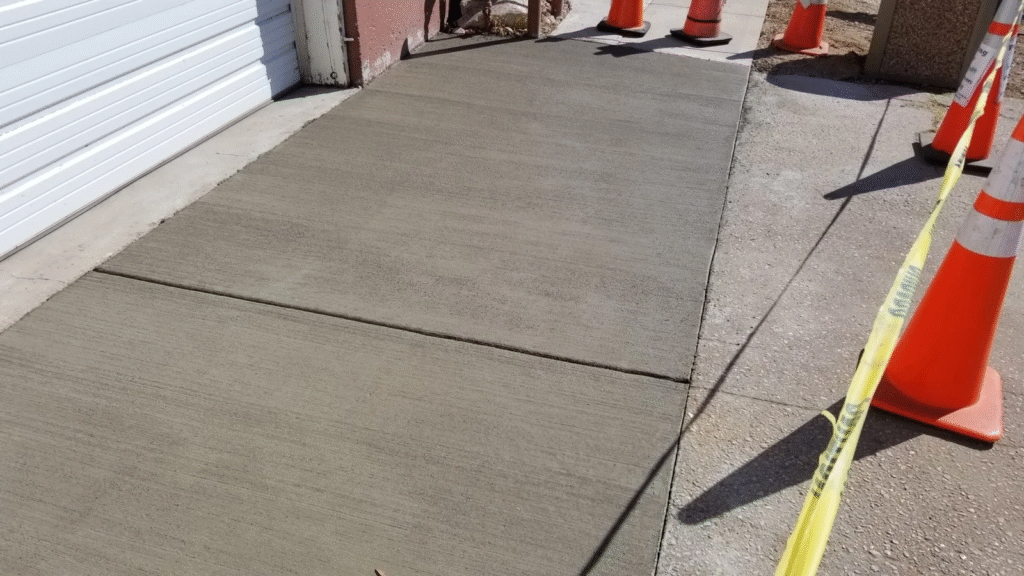
Commercial concrete flatwork is more than a construction task—it’s a long-term investment in safety, functionality, and property value. By focusing on preparation, durability, local experience, and overall value, businesses can move forward with clarity instead of uncertainty.
So if you are searching for a concrete flatwork contractor near you, Concrete and Excavating Inc. is the best choice you can make.
Connect with Concrete and Excavating Inc. now for more information!