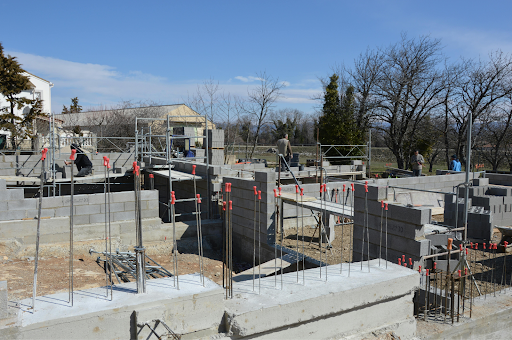
Foundations might not be the most exciting part of a project, but they’re absolutely essential. They transfer the weight of your structure to the earth, keep out moisture, and ensure your building stands strong through temperature swings, soil movement, and the years ahead.
In this guide, we’ll walk through the types of concrete foundations commonly used in residential and commercial projects and explain when each makes sense.
Why Your Foundation Matters
A foundation does more than just support a building. It must handle:
- Structural loads from walls, floors, and roof
- Soil conditions, including shifting clay, sand, or gravel
- Weather influences like freeze-thaw cycles common in Colorado
- Moisture control to prevent mold, rot, and other issues
Getting the right foundation reduces maintenance costs, improves energy performance, and makes future repairs easier.
Quick Overview of Foundation Types
Below is a snapshot of the most common concrete foundation types you’ll encounter in residential and commercial construction:
| Foundation Type | Best For | Typical Uses |
| Slab-on-Grade | Cost-effective projects | Homes, garages, light commercial |
| Basement Foundation | Extra living or storage space | Cold climate homes |
| Crawl Space | Moisture control and access | Homes on uneven sites |
| Spread Footing | Small to medium structures | Load-bearing walls & columns |
| Mat/Raft Foundation | Weak soil or heavy loads | Commercial buildings |
| Pile & Deep Foundations | Very heavy structures or poor surface soils | High-rises, bridges |
Understanding the Most Common Types of Concrete Foundations
- Slab-on-Grade Foundations
This is one of the simplest and most popular types of concrete foundations, especially for residential and light commercial projects. A slab-on-grade is exactly what it sounds like: a thick, flat concrete slab poured directly on leveled soil.
Builders often place a gravel base and vapor barrier underneath the slab to help with drainage and moisture control. Reinforcement like steel rebar or wire mesh strengthens the slab further.
Slab-on-grade foundations have become especially common in recent years. According to recent U.S. Census Bureau data, concrete slabs accounted for about 73 percent of all single-family home foundations in 2024, reflecting their affordability and efficiency in new construction (source).
Pros:
- Lower cost than basements
- Faster installation
- Good resistance to pests and mold
Cons:
- Plumbing and utilities must be planned before pouring
- Not ideal if you want finished basement space
In the Denver area, where soils can vary and frost depths must be accounted for, slab-on-grade is a strong choice for many single-story homes and smaller commercial buildings.
- Basement Foundations
If you’re building in an area where homeowners want extra storage or living space, a basement foundation is a traditional choice. This type typically involves deeper excavation to create usable below-ground space, bounded by concrete walls and a floor slab.
Pros:
- Additional usable space
- Good insulation against cold weather patterns
Cons:
- Higher construction cost
- Requires careful waterproofing to prevent water intrusion
Basement foundations are especially common in colder regions, though Denver’s wide temperature swings and unique soil types mean waterproofing and drainage design are essential.
- Crawl Space Foundations
Crawl space foundations elevate your structure slightly above ground level, creating a small, accessible space between the ground and the flooring system.
This foundation uses a perimeter concrete wall or piers placed around the building’s footprint. Crawl spaces help keep moisture away from the living space and make it easier to run utilities.
Pros:
- Easier access for repairs than slab
- Better moisture control than direct-on-ground slabs
Cons:
- Still requires good drainage and moisture barriers
- Typically more expensive than slab-on-grade
Denver’s climate, with its freeze-thaw cycles, can make crawl spaces a smart choice when soil conditions are less predictable.
- Spread Footing Foundations
Spread footing foundations are a common choice when loads need to be distributed evenly across the soil surface. They place individual concrete pads under each column or load-bearing wall, spreading the weight over a larger area.
Spread footings are especially common in residential and low-rise commercial settings.
Pros:
- Cost-effective for buildings on stable soils
- Simple to design and construct
Cons:
- Not suitable for weak soils without additional work
This type is often paired with slab or crawl space foundations as part of a complete system.
- Mat or Raft Foundations
Mat or raft foundations involve a large, continuous concrete slab that supports the entire building footprint. This design spreads the load widely and is ideal when surface soils have low bearing capacity.
Commercial buildings, warehouses, and structures with heavy loads often use mat foundations as part of engineered solutions.
Pros:
- Excellent load distribution
- Helpful where soil conditions are challenging
Cons:
- More expensive than shallow individual footings
For developers working on multi-story or heavier commercial buildings in the Denver Front Range region, this type of foundation is structurally sound and reliable when engineered correctly.
- Pile and Deep Foundations
When surface soils won’t support even a mat foundation, engineers turn to deep foundation solutions like piles or drilled shafts. These are long concrete, steel, or composite columns driven deep into the ground until they reach stable soil or rock.
Pile foundations transfer the load deep underground. Drilled shaft foundations, also known as caissons, are similar but are constructed by drilling holes to desired depths before concreting.
Pros:
- Excellent support in weak soil conditions
- Necessary for heavy or tall structures
Cons:
- More complex and costly to install
These are most often found in high-rise buildings, bridges, or sites with a high water table.
- Other Specialized Foundations
In some projects, hybrid systems or alternative foundation techniques may be used. For example:
- Grade Beams: Reinforced concrete beams placed between piers or piles to help manage loads.
- Rubble Trench: A more environmentally friendly method using stone or rubble with concrete grade beams, though it requires careful engineering.
These types are less common in standard Denver residential builds but can be useful in specialized or sustainable projects.
What Happens When You Choose the Wrong Foundation?
Choosing an inappropriate type can lead to issues like
- Settlement and cracking
- Moisture or water intrusion
- Structural shifts due to Colorado’s freeze-thaw cycles
A foundation installed without proper soil testing and grading can reduce the life of your building or necessitate expensive repairs.
How Professional Concrete Services Can Help
Foundations are the first step in building something that lasts. With so many types of concrete foundations and soil conditions in Denver, property owners benefit when they work with experienced professionals who can:
- Conduct or interpret geotechnical soil analysis
- Recommend the best foundation type for your site and budget
- Ensure compliance with Denver building codes and frost depth requirements
- Provide excavation, grading, and fine grading services
- Deliver quality concrete installation with ready-mix concrete and reinforcement where required
How Concrete and Excavating Inc. Helps with Every Type of Concrete Foundation in Denver
Choosing between the different types of concrete foundations is easier with the right team guiding the process. Concrete and Excavating Inc. supports homeowners and builders across Denver with complete services that cover excavation, grading, site prep, and expert concrete installation.
Their local crew understands Colorado soil conditions, frost depth requirements, and city codes, helping prevent delays and costly mistakes. By offering everything under one roof, they keep projects simple, efficient, and on schedule.
Final Thoughts
Choosing between the different types of concrete foundations can feel overwhelming, but the right choice makes all the difference in how long a home or building lasts. From simple slabs to full basements and deeper structural systems, each option serves a purpose depending on the soil, budget, and goals.
That’s where local experience really counts. Concrete and Excavating Inc. helps Denver homeowners and builders make smart, practical decisions and handles everything from excavation to final pour.
Contact Concrete and Excavating Inc. today for reliable guidance and a foundation built to stand strong for years to come.